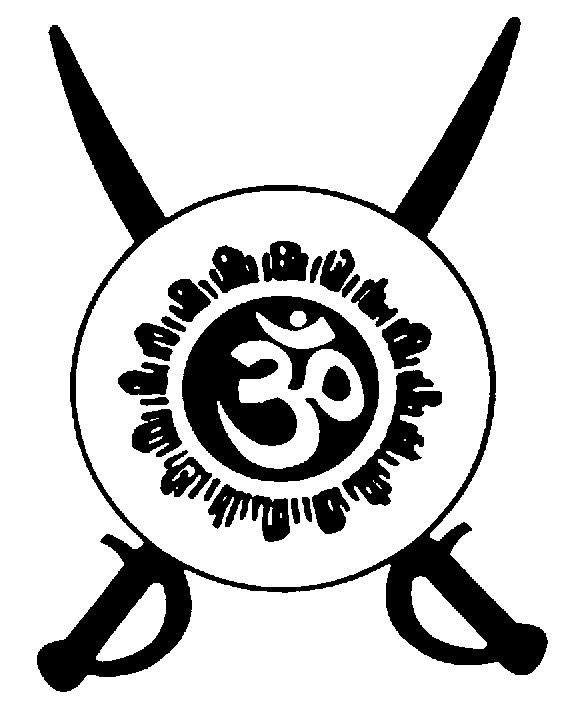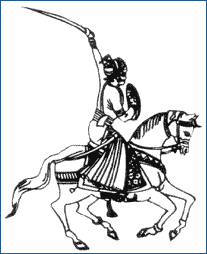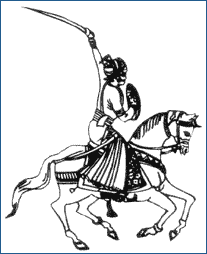
Maher Symbol – Horseman with sword and shield
|
The Mer population of Kathiawar region in Saurashtra also known as the Maher, Mihir, Mair or Mehr are a community of people who have evolved from the Kshatriya Rajput varna within Hinduism. They are believed to be of Indo-Aryan descent, and have a rich and diverse history involving many battles, valour & sacrifice to uphold their honour & values. Some of the sacrifices made by them were related to fulfilment of sacred oaths, duties and responsibilities towards common people & also to the Jethwa Ranas of Porbandar.
The population of Mers distributed in a number of 155 villages and some 23 nes was reported to be 50,000 according to the Census of 1951. The traditional occupations of the Mer are war and agricultural farming. Some of the Mer villages & land was given to them by the Jethwa Ranas of Porbandar as a token for being part of their royal army against invading tribes in the Kathiwar region.
Origins
The Mers (also known as the Mehars, Mahars, Mahers, Mihirs, Mehers, Mhairs, or Mhers) are of the so-called Aryan stock.
The word “Aryan” originated in North-West India. Some North-West Indian tribes,Medes and Parth tribes moved to warmer regions, which were located south as well as west of the Pamir Knot. Those tribes have been called Aryans and therefore the name of the region “ARYANA=Land of Aryans”; the country today known as Iran has its name based upon that. Because of similarities in language between several languages, historians call people of several nations the so called “Indo-Europeans” or “Aryans”.
The Mer/Med settlements
The ancestors of the Mers/Meds entered the Indian continent through the North-west (today known as west Punjab) together with Georgians of Georgia around B.C. 126. (Source: Hoskyn, 1922 pp. 22). The Georgians were later known as Gurjars. One specific report indicated that these people entered India through Baluchistan via Iran (Nadvi 1955, p73-75). At this time western India was under the sovereignty of the Guptas. The Kushans were out of the picture long before the Guptas came into power. It seems that the king of the Gupta dynasty in the North-West province drove away the migrant invaders i.e. the Meds and the Gurjars, to the south. The southern region of the Indus valley in the north was governed by the Jats, who flooded the country in the same way some three centuries earlier.
The Jats opposed these foreigners, who eventually overcame them. Thus, the Meds settled to the east of the Indus River, and the Gurjars went further south, It is reported that of the two tribes the Meds later known as the Mers or Mahers predominated in power and influence. (Hoskyn, 1922, p. 115-117, and Elliot, Ibid., p. 519.)
In Sanskrit inscriptions, Medpat is the name used for Mewar which became known as Udaipur state after the founding of the city of Udaipur in 1559. Medpat reminds the historians of a period when the territory was ruled by the people called Meds or Mers who were descendants of the Aryans.
Based upon historical evidence the ancestors of the tribe the Mers/Meds entered India through Pujab/Sindh region and continued further south into Gujarat leaving settlements in Ajmer (from the great Mer Sardar Ajo), Jesalmer (from the great Mer Sardar Jaslo), Badmer (from the great Mer Sardar Bad), Komalmer (from the great Mer Sardar Komal) & the Marwar region (Mhairwara region belonging to partially to Udaipur and also Jodhpur). They seemed to have settled down in the Kathiwar region and are today to be found in villages around Porbandar known as the Mahers of Kathiawar.
The Merwara, Mhairwara, Mirwara or Marwara region
The provinces which now go by the name of (Ajmer) Merwara and (Jodhpur) Marwar are the ancient home of the aboriginal clan of the Mers (also known as the Mars, Mhars, Mahars, Mhers, Mhairs, Mehars, Mairs or Mihirs). “The Mair or Mera is, “according to Colonel Tod, “the mountaineer of Rajpootana, and the country he “inhabits is styled Mairwara or the region of hills. As mentioned before the famous historical cities Ajmer, Jesalmer, Khumbhalmer & Komalmer are an attest of the Mers former power and settlements.
The Mers were known as “hillmen” that populated the plain and are also found there. They remained masters of the soil until they were ousted later on by victorious invaders. As chiefs and warriors, like other aboriginal tribes, they have a claim to be called Rajputs, for the name Rajput or Rajputra confers only to a social and not an ethological distinction. The term Rajput is generally applied to an Aryan Ksatriya though everybody knows that the victors intermarried freely with the vanquished non-Aryans, who were never totally annihilated & that the Mer and other non-Aryan tribes claim relationship with the Rajputs.
The Mers of Kathiawar
In 712 A.D Mohabed-Been-Kasim invaded Sindh, a tribe of Rajputs known by the name of Mers of Medhs, was very powerful in Southern part of Sindh. Col. Walker in the history of Kathiawar notes that the Mers were intimately connected with the Jethwa Ranas of Porbandar. He also mentions that the Jethwas and the Mers belong to the same fold. The Mers could not keep up the same traditions and could not compete with the Jethwas. The Jethwas went ahead and the Mers lagged behind. In the course of time the Jethwas began to keep themselves distant from the Mers and the Mers were soon looked down upon as the sub-ordinate or second rate people. The distances went on widening and the Jethwas completely disassociated themselves from the Mers, so, much that they used the Mers to help them in their battles against their enemies and in return of the services rendered 24 villages in Barda. These twenty four villages were considered to be their possession even to this day. Of course, these Mers were exempted from all sorts of taxes except only nominal tax. Today we find a great difference between the Jethwas and the Mers in so many respects such as manners, custom, the ways of the life due to different problems and different circumstances. But one thing is quite clear the Jethwas depended for their present and past position on strength of Mers and today too we find that the Jethwas have not forgotten the debt gratitude they owe to the Mers. It was custom that when a Rana of Porbandar ascended the throne or the Gaddi, the headman of Mers used to cut his smallest finger-tip of his hand and used to make a “Tilak” mark of blood on the forehead of the Rana. This fact speaks for itself.
According to the Barots they read in their own books that the forefathers of the Jethwa and the Mers were the same and they came and settled in Saurashtra at the same time which is around 900 A.D. The problems that the Jethwa Rajputs had to solve were the same that the Mers had to solve. So we can see that they were sailing on the same boat. Barots go so far as to maintain that the Jethwas belong to the line of the younger brother and so long as they were afraid of the common enemies they lived as brothers. As soon as the common danger disappeared, they began to look at one another with strange eyes. This is not only what has happened in the case of Jethwas and Mers but in the case of so many communities. A sort of bar often comes and stands between even the children of the same father. Changing circumstances has always created petty communities and so many petty factions. There are so many other proofs also to convince us that the Jethwas and the Mers belong to a common stock.
Mer lineages
The Mers are divided into 14 exogamous lineages. Each of these lineages (referred to as Sakas) is further divided to minor or major segments (clans) distributed in a number of villages (gotras). Some of these segments are names after names of the villages inhabited by the people of that segment. Out of the 14 lineages, four are outstanding in status on account of their population, land ownership and historical standing in the composition of the Mer community. These four lineages are: Keshwala, Sisodia, Odedra (Sumra) & Rajshakha whose descendants are settled largely in the villages of the highland located in the Porbandar region.
The other 10 lineages are: Parmar, Vaghela (Waghela), Chudasama, Chauhan, Bhatti, Vala, Jadeja, Solanki, Chavda & Vadher who largely inhabit the villages in the lowland located in Ranavava & Kutiana area.
The Rajput Mer Lineages
- Sisodia (Suryavanshi)
- Subdivisions: Modhvadia, Godhania, Khastriya, Ranavaya, Kuchhadia & Haddiya
- Odedra (also known as Sumra/Soomro/Soomra/Sumrah/Sumera) (Agnivanshi)
- Rajshakha (Suryavanshi)
- Subdivisions: Khunti, Karavadra, Gorania, Sundavadra, Bokhiriya, Selor, Selan & Jethwa
- Parmar (Agnivanshi)
- Subdivisions: Mahiyaria, Balega, Mandera, Pata & Gorsera
- Jadeja (Yaduvanshi)
- Subdivisions: Kadcha, Tarkhala, Ratia & Kadegia
- Chavda (Chandravanshi)
- Subdividions: Bhatti,Bapodra,Bhutiya & Bhadia)
- Solanki (Agnivanshi)
- Subdivisions: Timba, Divrania, Sida, Bhogesra, Juneja & Waghela
The Mers of Rajasthan & Madhya Pradesh
The name Med-pat are (covered by the former state of Udaipur) means the land of the people called Meds. This name was possibly the original one of the region of Mewad, the habitant of Meds. In subsequent historical times, the area was said to have been controlled by the people named Mev or Mer. A part of this region is even now known as Mewad. However, the people named Mers were concentrated in and around Devgarh and Ajmer-Merwara areas. Some scholars were of the opinion that the Mers of Rajasthan and Madhya Pradesh represent a section of the Hun tribe of the historical fame.
Organisation of the Mer Sub-groups
In Rajasthan and Madhya Pradesh, four sub-regional groups of the Mer were distributed in the past. They have had several endogamous (the social practice of marrying another member of the same clan, people, or other kinship group) groups called hissa, each named after place-names and with names of exogamous (the custom in some societies of marrying outside their people’s own social group) lineages called got. These are given below:
Group 1
In this main group there were nine hissas (groups), viz., Kotah, Bhopal, Bundi, Zalavad, Lakheri, Baran, Mangrol, Iklora and Khanpur.
Group 2
In the second group, there were four hissas (groups), such as, Udaipur, Mandorgarh, Jaipur, and Ajmer located in the region known as Merwara. (This group did not send any representative to attend the Conference of all the Mers at Bhopal, referred to later in this account).
Group 3
The Mers of Bhopal also formed single independent group of hissa. Many of the Bhopal Mers had taken to the profession of village guides
as they were poor and did not own land for cultivation.
Group 4
In this group, there were three main hissas, viz., Indore, Ujjain and Ratlam. It is interesting to note that a village near Byavar had a group of Mers called Keshwala; and that the Keshwala lineage of Saurashtra was looked upon there, as the original (adya or asl) Mers.
The majority of the Mers in Rajasthan and Madhya Pradesh worked in small factories, textile mills and railways. A few were landholders and farmers. They spoke various Hindi dialects, and had a material culture differing widely from that of the Mers of Saurashtra, who speak a variant of Gujarati dialects in the villages.
The social structure of the Mers of Saurashtra is marked by customs of bilateral cross-cousin marriage, junior sororate. The Mers of Saurashtra have fourteen exogamous lineages. It appears that there is probably no group of Mers in Rajasthan and Madhya Pradesh who practise symmetrical cross-cousin marriage.
The Rajput Mers of Kathiwar
After coming to Saurashtra it appears that the Mers must have come in contact with the Rajput families. The surnames must have been adopted by the Mers as they offered and accepted daughters from those of Rajput families. It also looks very strange that we find surnames like – Valas a surname which is known to be one of the principal branches of Kathis. It is very strange things to see how fusions of castes have come into being.
The language of these Mers is very strong, and can sound harsh in tone. The dialect of Gujarati spoken has a very apprent Rajasthani influence, this is perhaps due to the Rajputs in the caste who have ancestry in the desert region.
Religion
The Mers are devout Hindus. They worship Hindu gods and goddesses and observe all the major Hindu festivals. They have their own temple for the community members. Each clan has its own clan Goddess worshipped by the head of the household on various occasions, The clans deity separates one clan from the other. They makes special offerings to her during the Navratri festival in the month of Aswin (September – October).
Mer Kuldevi Tradition
The kuldevi has a crucial role in the religious lives of Mer men and women: she is the foremost divine guardian of their fortune and honour. Many of the myths that recount the miraculous deeds she performs as guardian not only make wonderful reading they abound in romance, intrigue, danger, and conquest they also give access to the worldview of Mer women.
A goddess begins her career as a kuldevi when she becomes incarnate at a critical point in time in order to rescue an endangered group of Mer whom she judges worthy of her protection. In most cases she reveals herself to their leader and inspires him to surmount whatever problems he and his followers face. Afterward she helps him establish a kingdom, at which point he and his relatives become the founders of a kinship branch (kul or shakh ) with a discrete political identity. Later the kuldevi intermittently manifests her presence by helping the group overcome other military and political crises. These manifestations are celebrated in myths chronicling the origins and early achievements of the Mer groups that kuldevis protect.
Because when a woman marries she loses membership in her father’s kul and becomes a member of her husband’s kul , she is expected to worship the kuldevi who protects its members. Thus, the very first thing a bride must do when she enters her husband’s household is to give respect (dhok ) to her new kuldevi . This is a caste norm; every Mer must loyally propitiate the kuldevi who has accompanied the family’s kul into battle.
Mer Deities
Ramdev/Rama Pir
Bhagvan Ramdevji Maharaj was a Tunvar Rajput regarded by Hindus as the incarnation of Lord Krishna who tried to rid the world of sin and hatred-he is known as the ‘dhori dhaja’ carrier which shows he was a warrior deity who bought innocence and bravery here. History goes that five Pirs from Mecca came to test his miraculous powers and after being convinced, paid their homage to him. Since then he is venerated by Muslims as Ramshahpir or Ramapir.
The fame of Ramapir reached far and wide. He believed in the equality of all human beings, both high and low, rich and poor. He helped the down trodden by granting them their wishes. Bhagvan Ramdevji Maharaj took samadhi (conscious exit from the mortal body.) in 1459A.D. Maharaj Ganga Singh of Bikaner constructed a temple around the samadhi in 1931A.D. The devotees of Ramdevpir offer rice, coconuts, churma and toy wooden horses to Ramdevji. The samadhi temple is in Ramdevra, Rajasthan.
Vachrada Dada
Vachrada Dada was of the Darbar caste and he was of Rajput origin, he became a Survir in seven births. Every time he went to get married Muslims would come and take the cattle and kill them and they would do this whilst Vachra dada was walking around the fire getting married (pheras) it is said that he never managed to finish his pheras and he never got married
The medium man (bhuva) of Vachrada Dada is approached for diagnosis and curing of disease among men and animals. When a family member, a cow, a buffalo etc. falls ill or dies, it is believed that the spirit of an ancestor had been annoyed because of neglect of timely worship, lack of offering ritual food and respect. When someone is harassed by an evil spirit, a medium man of Vachhada Dada is consulted. If the evil spirit tries to evade the commands of Vachhada Dada, the medium man threatens to punish the spirit by inciting against it the wrath of this powerful deity.
Vachhada Dada sits on a white Kathiawari horse with a snake at his feet and a flaming sword in his hands. He is worshipped by Kheruds (Gujarati word for farmer) to protect their cattle and keep their crops thriving. Many temples/deras can be found in Gujarat devoted to him.
Mer Raas
Mers perform their own unique style of dandiya raas, a traditional folk dance common in Gujarat. Mer Raas is unique in style, pace and athletiscm. The dance is seen by historians to resemble strikes in battle, and is revered internationally.

Maniyaro Raas;Visavada Raas mandali.
Inter-State Conference of Mer community
All India Mer Conference was held on 27th and 28th of the month February, 1955 at Bhopal in Madhya Pradesh. In local language, it was called Akhil Baratiya Mer Parishad. The Conference was attended to by about fifty Mer leaders from Saurashtra and nearly two thousand Mers from Rajasthan and Madhya Pradesh. Maldhev Ranabhai Keshwala, the distinguished Mer leader of Saurashtra inaugurated and presided over the function. Maldev Bapu as he was popularly called, addressed the gath
ering in Hindi, a part of which transliterated and present below:
“Dear friends” Since centuries, our ancestors ruled Rajasthan, Madhya Pradesh and Saurashtra by the dint of their unity, solidarity and physical power. They served the people as rules and became famous for their popular rule in neighbouring states. History provides ample evidence of this. We the children of Unuh, (a powerful Mer ancestor), have today gathered together here for the upliftment of our community. I am glad to welcome you and to have the opportunity of inviting you to stand on a common platform in order to strengthen the bonds of unity and brotherhood among all Mers. I have no words to express my heartiest thanks for the honour you have given me to preside over this function and to guide the deliberations”
He then briefly described the socio-economic conditions of the Mers of Saurashtra, and indicated as to how they were trying to raise the educational status of the Mers by running a Mer Students Boarding House in Porbandar, and encouraged young boys from villages to avail of better occupational opportunities. This , he said had helped in having created a group of highly qualified people such as barristers, doctors, advocates, engineers and a few other specialist and professionals among the Mers, Referring to the historical past of the Mers, he said that the historians called them Maitraka, meaning descendants of the son of God. He also stated “Among the Gurjars we were known as Mihir. In fact we all are Rajputs, and are counted as one of the thirty six clans of the Rajputs.”
The conference noted that the Mers of Saurashtra were the most advanced, while the Mers of various groups in Rajasthan and Madhya Pradesh were relatively backward. The Conference therefore, recommended that a strong social reform movement to improve rules and regulations of the caste phanayats in the latter two states (Rajasthan & Madhya Pradesh) should be started as quickly as possible. Four resolutions were also passed at the conference, viz. against dowry, drinking and other social evils prevalent among the Mers living in all the regions.
Famous Mers from Kathiawar Region
- Nagarjun Karsan Sisodiya – A freedom fighter who gave his life for the sake of a nation.
- Maldev Ranabhai Keshwala – A spiritual leader and foremost a freedom fighter of distinction within the Rajput Mer community of Kathiawar.
- Maldevji Odedra – Noted jurist and socio-political leader, former M.P., Finance Minister and president of Gujarat Congress Organisation.
|